




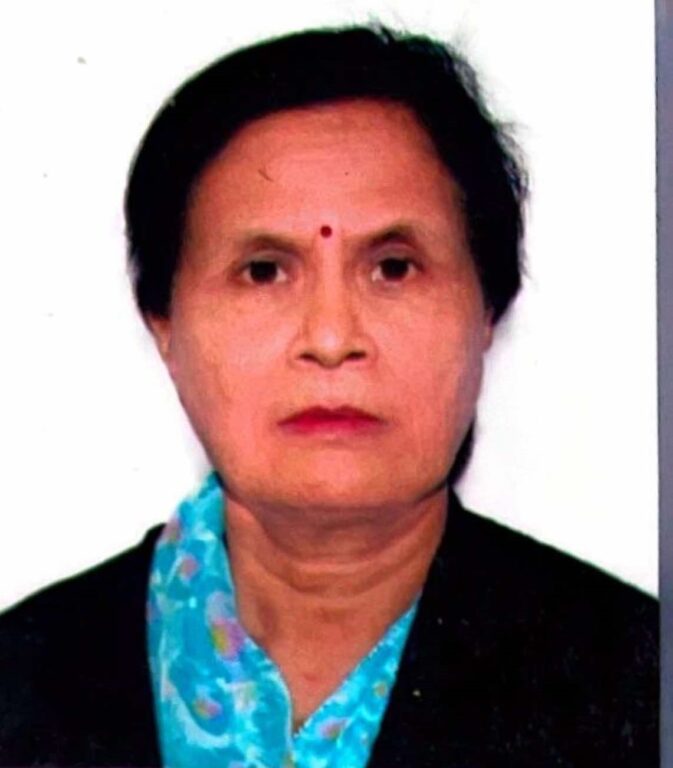
The family was educated and had done IA, BA Nepali language and additional subjects in economics since school level. To do a Masters, you need to have 6 credit hours in electives. However, TU got confused by saying that I did not have enough score in my studies by having only 5 credits instead of 6 credits in the TU course. After a long fight, the professor was given to Pokhara, but the family did not give permission. After doing a Masters in one subject, it became a rule that even if you have a diploma in another subject, you can teach.
When I went to Patan Campus the next day after the routine was given, another person had already taken permission from the Dean’s office. Then, when I went to TU to apply for a Masters in Nepali language, it said that the credit hours were not enough. I fought why we should suffer the punishment of TU for the mistake.
After arguing with Mangalraj Joshi about where the students I taught could study Masters and I could not, the policy was amended and I did my Masters in Nepali language. I decided that I would study Nepali language and it became easier to identify myself.
Since I studied Nepali, Kamal Prakash Malla gave me the responsibility of reviewing the encyclopedia on culture with Dhan Bahadur Sir. The encyclopedia that was published at that time was called Newa Encyclopedia. I coordinated the cultural aspect of this as well.
Similarly, in the larger national history, I got the opportunity to work with many scholars including Ishwar Lal Pradhan, Triratna Manandhar Madsab, Tulsiram Baidya. It was Dhanbajra Bajracharya Sir who encouraged me in Nepali. He encouraged me to work by focusing on records, records, and events. In this way, I got the opportunity to understand and work on the history of Nepali by collecting a lot of materials.
In Nepali, Kamal Prakash Malla said that the article was good, but my article did not come. Someone tried to stop me from being the first in Nepali and someone else was selected. Then I met the woman who had been selected for PhD at an event. I asked her how much of the PhD work was completed. She said that the introduction chapter was not finished.
Then I decided to do a PhD in Nepali language again, on modern drama, on women, in Purnaki. At that time, an advertisement came, and I did not keep a single article of the previous one to challenge the university. First, another woman was selected in Power Politics. My strategy was to do a PhD in Newari language anyway. TU could not understand such a thing.
In the meantime, a scholarship also came out. At that time, while doing a PhD, the registration was temporary first and permanent only after a year. During the one-year waiting period for permanent, I applied to TU, which was approved. This allowed me to collect all the materials needed for the historical background in this period. An extra background was also needed for the PhD. The project was also completed in this 1 year, and two tasks, the work of collecting materials and the historical background, were completed at once.
I had a 3-year scholarship. However, since the work had already been completed, it was completed in 2 years. The scholarship used to be given a budget for this and that work per year, according to the title. The budget and book set for printing my thesis were very thick. I completed the work quickly and submitted the thesis in 2 and a half years. The initial scholarship of 600 increased to 1000. The previous project also received money. Due to this, I did not have to spend the entire scholarship I received and TU benefited.
Thus, I became the first woman to do a PhD in Nepali Language in Literature. This is an example of what can be done if you have the inner desire. Earlier, I had to struggle a lot and file a lawsuit to become a lecturer or professor. Since I did not belong to any party and have a strong temperament, it was difficult to get selected. You have to be tough and hardworking to build your economic career. Any challenge becomes normal in front of those who study, read and move forward diligently.
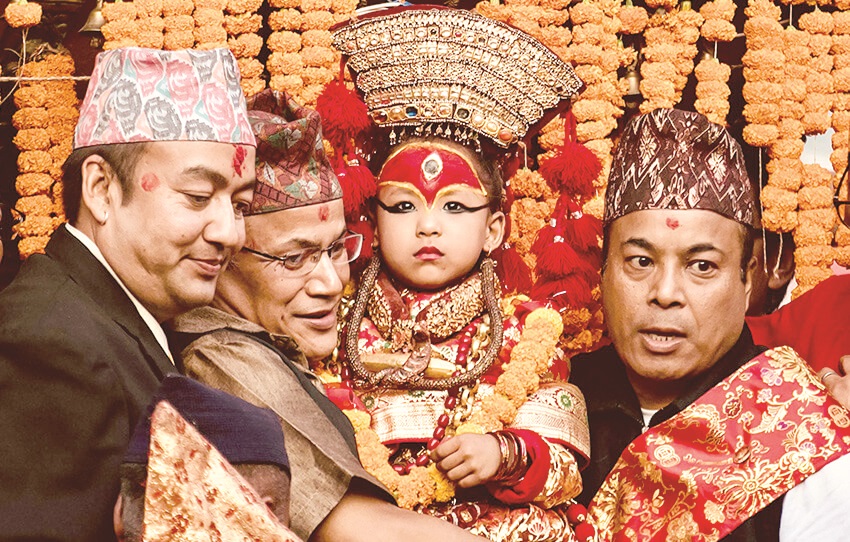
Kumari practice
The history of the Kumari practice is very old. Initially, Vidya Bhandari, from the CPN-UML, opposed Kumari. She and those who do not understand the culture of Kumari have a different perspective. Those who understand the Kumari tradition look at it with respect. Kumari means Sri Shakti. I had once written that Kumari is the empowerment of women in self-esteem. Indra Jatra is a demonstration of Sri Shakti. I have written that Kumari’s Jatra is the Jatra of Sri Shakti.
Whether the Newar community is Buddhist or Hindu, they respect Kumari in their own way. Hindus consider her as Taleju Bhavani. Buddhists believe that Kumari is the power that unites all power in the female power. Kumari is the goddess of wealth.
Kumari is considered to be the symbol of wealth that comes out of the earth first. Lakshmi, a mineral that comes out of a mine, pearls, pearls that come out of the sea bottom are wealth. The gems of the Navaratna, which are the wealth of the underworld. These three forms are Vasundhara. Vasundhara is also a symbol of Kumari. Ajima, Vajrayogini is Kumari. Saraswati, Sridevi are Kumari. Even when it comes to performing great pujas from birth to death, Kumari should be worshipped. Both Buddhists and Hindus consider Kumari as a deity. Whatever is immeasurable, whatever is unique in its own way, it is Kumari who gives power. The embodiment of Sridevi is Kumari.
When did this tradition begin? We can tell from the historical background. It is also said that Yagyaman started it in the second or third century. Many historical documents mention that it dates back to the 5th, 6th, 7th, and 8th centuries. What we see when we read history is that it was after a person was replaced as a Kumari. The Newars also keep that replacement for the protection of their community, region, and state.
Buddhist Newars have a Kumari in their residence, and they keep it as a deity to protect them. After seeing this in the Newar community, the kings also ordered it to be installed. Taleju Bhawani was installed in Bhaktapur. Jyoti Malla talked to Kumari and talked about conducting royal affairs. Seeing this, the king’s wife brought the daughters of Shakya and Bajracharya and installed Kumari and it was established as Taleju Bhawani.
There was no Taleju Bhawani in Kathmandu. Even before King Mahendra Malla, Taleju Bhawani used to go to Bhaktapur to worship Kumari. After that, Taleju was also installed at Hanuman Dhoka in Kathmandu. Most of the Jatra festival traditions are said to have started with Amar Malla, but research is yet to be done. Due to the rivalry of the Malla kings, Siddhi Narasimha Malla established Taleju Bhavani in Patan and installed Kumari.
The kings replaced Kumari for the security of the state. Historically, there was a tree near the Nepal Samacharpatra office premises. No one used to cultivate there. It was kept safe as a place for Kumari to play. That big tree where Kumari played absorbs the rain and there is a water source (well) under it. That water was used for irrigation in nearby fields. That tree does not exist now.
Vajrayogini is also a symbol of Kumari. Seeing that Kumari protects the community, the Malla kings also installed Kumari as the guardian of the state. This is how the tradition started. Those who do not understand this tradition have made it an issue that Kumari means separating children from society and exploiting child rights. At that time, they also asked me many questions. When the Kumari tradition started, there was no tradition of reading. The Kumari tradition is good. If you respect it with a pure heart, which is the divine power, you will move forward as a good hero.
It is not bad to consider Kumari as a deity. It is not a bad culture to consider your children as deities. Even in the modern era, you do as your children tell you. That is the tradition of Kumari among the Newars. It is as if those who do not understand philosophy and culture mocked Kumari. You should not oppose any religion, culture or subject without understanding it deeply.
When Kumari was opposed, the Deuki tradition, Kumari deity, and jhuma were opposed. The Kumari idol in the premises of Kamna Publications Pvt. Ltd. is in the form of an idol, which was transformed into an idol after Param Anand. It is a separate type of idol. There are 4 Kumari temples around Nepal Samacharpatra. After the founder of Nepal Samacharpatra, the late Pushkarlal Shrestha, built an office, the Kumari temple there has become good. It has become difficult to see it anywhere else.
Taleju Bhavani is triangular in shape. The mind, intellect, and soul are intertwined. It is a matter of ultimate happiness, ultimate bliss, ultimate knowledge. Kumari is a matter of seeking nothingness. Those who become Kumaris have attained divine knowledge and they themselves speak about the power of Kumari. Those who become Kumaris do not say this tradition is bad. The only difference is how and where to use it, since there is divine power.
After 2046, after democracy came to the country, the UML strongly opposed the Kumari, Jhuma, and Deuki practices. Since the 2063 interim constitution, after the 2072 constitution, it has been said that all castes, languages, religions, and cultures should be protected. The SID report still mentions the Kumari practice as a practice against women.
During Kumari Puja, boys sit and worship in one place. Gurus sit and worship in one place. Women go to prepare a feast and arrange Thagu to worship Kumari, and only after women sit and worship Kumari and eat prasad, they bring them to the place where the Gurus worshiped them. Only then do they sit and distribute prasad to everyone.
Isn’t this women empowerment? This is respecting women. Without women’s power, all other worship is wasted. Kumari worship is only done in big worship. The main source of worship is for women’s power. Therefore, there is no need to remove the tradition of Kumari. In Newari tradition, it is believed that Kumari and Kumar are all children and they are gods.
When entrusting our gods, 10 deeds must be done. This is what must be done within the 10 deeds. While doing this, the Kumari girls must be worshipped. At that time, the Kumari should be worshipped first. I am culturally sensitive. Many media outlets spoke to me on such issues. I took a stand on the issue of Kumari culture.
Then the outgoing Rashtrathila, who had been leading the protest, also apologized in writing. After UML leader Krishnagopal apologized in writing, saying that he had insulted her, he handed her a written apology. After that, she was reluctant to talk, but others filed a case in the Supreme Court. I have published a book on this issue called Supreme Kumari.
The case was filed after the palace massacre before the Republic. Mukti Pradhan used to argue on behalf of the Newars. On his advice, a group of 25 people led by me filed a case in favor of the Kumari tradition. It took almost 2 years to reach a decision. It was decided that the Kumari tradition should be preserved and not destroyed by providing 99 pieces of evidence. The movement continued during the reign of King Gyanendra. The king himself was afraid that something would happen if he supported the Kumari. Even if the king and the Kumari do not match, the Kumari is removed.
A lot of research is done when selecting the Kumari. A horse is kept at Hanuman Dhoka, and that horse is selected that has not been in contact with the Kumari horse. The Kumari changes, but the horse does not change. The Kumari changed after the palace massacre. The king used to come to perform the Rath Yatra during the Kumari Jatra, saying that the king is supreme and the Kumari is not supreme, and after the Jatra, he would come to offer tika.
Since the Kumari is meant to protect the country, the Kumari Rath Yatra used to be held only twice a year. It is a tradition from the beginning to inspect one lower region, and another upper region, inspect and renew it. Prithvi Narayan Shah could not win at other times, but he won when he performed the Rath Yatra of Kumari. While the Rath Yatra of Kumari was going on, Prithvi Narayan Shah’s forces came from Bhimsenstha. At that time, Jayaprakash Malla had gone to Bhaktapur and was hiding.
The Indra Jatra had already started in Kathmandu and the Kumari Jatra was going on. It is said that Prithvi Narayan Shah chose a king after he said that he considered the Kumari culture rather than who to make him king. After that, the Shah kings did not suppress the Newari culture. UML leaders tried to eliminate this culture, but Pundevi filed a case in the Supreme Court.
This group was led by advocate Mira Dhungana, who included various castes. In that case, the Newari side had a small number, but the UML side had a large number, including the force. On their behalf, Pundevi, seeing the response we gave to Kumari to protect child rights, had accepted defeat, saying that you have a much bigger history than what we asked for.
That issue brought awareness to understand and explain the importance and necessity of the Kumari tradition, and it was good. After the Republic came, the issue arose again. If there was no king, the Kumari would not exist. How do you look at the signs, how do you match the signs? Then, even if there is a king, the head of the nation will still be there.
Like before, when the king changes, the Kumari will not change. Now, the head of the nation changes according to the combination of the Kumari and the horse. Earlier, the signs of the nation were not looked at, they looked at the king. Now, astrologers take a guess from the nation to see what will happen in the nation. After democracy, when the President was acting, I spoke about the Kumari tradition from morning to evening on Metro FM.
He said that the Kumari will not disappear without a king. At that time, police and security were deployed throughout Kasthamandap, in the squares, alleys, and in all the temples inside Hanumandhoka. It looked normal outside. Armed police were deployed from Basantapur to New Road Gate. By doing this, the Kumari was protected. Now the society has accepted and established it.
The importance of the Kumari tradition has increased in recent times. It has also become financially strong. The Kathmandu Metropolitan City itself has provided the budget. It has the support of the Government of Nepal, Guthi Sansthan and other concerned bodies. Now, once a Kumari becomes a virgin, the practice of saving money in her account has been started. This has been good. It is also convenient to study.
Now, the school in which the Kumari says she will study is given a scholarship. Not only this, they also request the Kumari to study in their school. Schools want to advertise that they have studied as Kumaris in our country. Those who can go outside study in the school. Those who cannot, the teacher goes to the school and takes the exam. The words spoken by those who have become Kumaris are the words of the soul. They are proving that they have divine power.
Now, the Prime Minister, the Chief of Army Staff, the President, and even the Prime Minister come to see Kumari’s yoga. We don’t have to tell the new generation about Kumari. Now, those who have already become Kumari are telling and explaining it. Since the time of Keshav Sthapit, the Metropolitan City has allocated a budget and honored her at Hanuman Dhoka during Dashain and given her a year-round allowance. Now, the Metropolitan City also gives allowances to former Kumaris. Once a year, they are given cash along with the honor of Kumari at Hanuman Dhoka. The issue of Kumari has become established and dignified.
During the debate, I asked the lawyers who opposed the red dress of Kumari, why do you wear a black coat when you come to the debate. When I asked why schools wear dresses, everyone fell silent. Dress is the basis of discipline. There is no ban on Kumari walking outside.
Indra Jatra is the first one to go out and observe. During the Rana period, women were not allowed to walk outside, but during Gaijatra, Kumari Jatra, Indra Jatra, and other festivals, Kumari is taken to show the procession. During the Gai Jatra, the virgin is taken from Asan to Bhagwan and Lagan.
During the Jatra of Seto Machendranath held in the month of Poush, the chariot of Seto Machendranath is taken to show the Jatra. When the Kalash of Pashupati is brought, the Kumari is brought in and brought in at the Taleju Bhawani of Hanuman Dhoka. Now, the place where it is taken for viewing is changed. Earlier, it was in 2007.
When Binavajra Munakari wrote the book Taleju Bhawani in Bhaktapur, he made the Kumari there the chief guest. After bringing the Kumari and placing it in the khat, she performed puja in front of the hall, and the program started with the Kumari giving tika and prasad to everyone. In Kathmandu, a former Kumari was brought in and made the chief guest. Let’s start with such changes.
Another incident was that Ishabeda came to Kathmandu to make a documentary about the Kumari. She could not do it because of the very tight security in Kathmandu. She made a documentary about the Kumari of Bhaktapur. The Kumari of Bhaktapur could go to school and go to parties. After making the documentary, she took the Kumari to America to be inaugurated by CNN. There was also opposition to that. Kumari, who had never been outside the country, was taken to America. She was taken to America without telling anyone, including Kumari’s parents.
When there was opposition in Nepal, she had to be brought to India and kept hidden. On the other hand, since Kumari’s power could not be implanted, another Kumari could not be kept. After the opposition in Nepal subsided, Kumari was finally brought to Nepal. In Kathmandu, Kumari is worshipped twice daily. Once by Rajopadhyay and once by Bajracharya. No one except the Guru and Kumari is allowed to enter the worship hall performed by Bajracharya.
Kumari has an entrance below and above. Above is a room with the complete art of Jayashree Malla. Hindus worship there. Bajracharya worships in the entrance below. This worship is done with complete discipline. Society played a role, and the state and law have protected Kumari worship and practice.
Now the Kumari practice has been legally established as a strong culture. If the opposition to Kumari had not reached the Supreme Court, there would not have been so much highlight and discussion. Now no one had to speak out, it has become a legally strong culture. The Supreme Court itself has established that the culture should be preserved and protected rather than someone’s defeat or victory. The Kumari culture is important in Newari society. For this, women’s groups went to different places to discuss and explain.
In Tokha, both Kumari and Ganesh are girls. First of all, they keep Kumari in any festival. First, they despise Kumari and spread the bad news that if you marry her, your husband will die. Vijay Malla wrote a Kumari novel and Neer Shah made a color film about Kumari. In that film, a driver likes Kumari and he dies in an accident. Then, it ended with the saying that if Kumari marries the man she likes, she will die. When I met Vijay Malla and asked him about this, he said that his novel did not say anything like that and that women are respected in Newari culture.
In Newari tradition, it is said that not only sons can marry but also daughters. Dhananjaya Upadhyaya was married to Bajracharya’s daughter. This is proof that women and men had equal rights in Newari culture. During the Indra Jatra, the same Upadhyaya started the practice of keeping photos of mother and daughter. It is not bad if a girl marries a boy. Dhananjaya Upadhyaya has an important role in saving the Kumari tradition. Hindus believe that Dhananjaya Upadhyaya wrote Swasthani. He is considered invincible.